
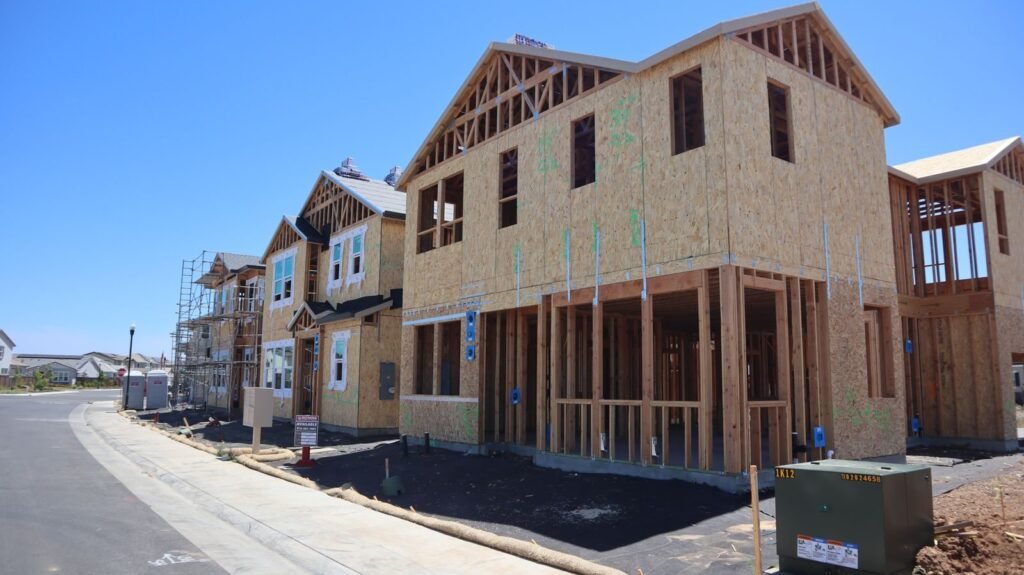
When you’re building a home, the decision list feels endless — floor plans, countertops, fixtures, paint. Technology rarely makes that list, and it’s easy to see why: “We’ll figure out the Wi-Fi after we move in.”
Here’s the problem: the building phase is the only time your home’s technology can be done right at the lowest possible cost. Once the drywall goes up, every option gets harder, uglier, and more expensive. That’s why a growing number of homeowners and builders bring in an IT and smart home professional during design and framing — the same way you’d consult an electrician or plumber. Here’s what that consultation actually gets you.
1. Wiring While the Walls Are Open Costs a Fraction of Doing It Later
Running network, speaker, and camera wiring during framing is fast and clean. Doing the same job after construction means cutting drywall, fishing cables through finished walls, and patching and repainting — installers estimate retrofit wiring costs 40–60% more in labor alone, and some locations (like exterior walls for security cameras) become nearly impossible to reach cleanly.
A pre-construction consultation maps every cable run — network drops, TV locations, ceiling speakers, camera positions, Wi-Fi access points — so the wiring crew installs it all in a single pass.
2. Wi-Fi That Actually Works in Every Room
Modern homes are tough on Wi-Fi: foil-backed insulation, concrete, metal ductwork, and sheer square footage all block signal. A smart home consultant studies your floor plan and designs Wi-Fi coverage into the house — placing wired access points in ceilings where they’re invisible and effective, instead of a lonely router in a closet fighting to reach the bonus room.
This matters more every year. Nearly half of U.S. internet households already own smart home devices, according to Parks Associates research, and every one of them — thermostats, doorbells, locks, cameras, TVs — depends on that network.

3. Independent Advice Instead of a Sales Pitch
Consulting with an IT service is different from buying a package from a security company or a big-box retailer. An independent consultant isn’t locked into one brand or a monthly-subscription business model. At Riverview IT, for example, we design camera systems that store footage on equipment you own — no monthly cloud fees, no contracts — and we recommend devices based on what fits your home and budget, including how everything works together under open standards like Matter.
4. It Protects Your Home’s Value
Buyers increasingly expect homes to be technology-ready. Research from the National Association of Home Builders shows security and home-technology features rank high on buyer wish lists, and industry studies suggest smart home features can add up to 5% to a home’s resale value. Structured wiring in the walls is permanent infrastructure — like plumbing — that keeps paying off through every future technology upgrade.
5. One Point of Contact From Blueprint to Move-In (and Beyond)
Perhaps the biggest benefit: someone owns the outcome. A smart home consultant coordinates with your builder and electrician, tests everything before closing, and hands you a home where the Wi-Fi, cameras, audio, and smart devices all work on day one. And when you have a question six months later, you call a local person — not a 1-800 number.
Building in the Chattanooga Area?
Riverview IT Solutions partners with custom and spec builders across Chattanooga to plan, wire, and integrate technology before the walls close up. See how our smart home services for new construction work, or request a free consultation — ideally before framing, but the earlier the better. Call us at (423) 500-0140.